
Discord Coaching: Your Guide to Recurring Income
Published on October 8, 2026 · Reading time: 15 min
A lot of coaches are sitting on the same problem.
They already have a lively Discord. People check in, post screenshots, ask questions, share wins, and keep each other moving. The coach is active every day, but the business side still runs like a favor instead of a system.
That gap matters. An engaged community is valuable, but if access is free, payments are inconsistent, and the coach has to manage everything by hand, the server becomes more work every month. Discord coaching can absolutely become recurring income. It just doesn't happen by accident.
Your Discord Community Is Engaged Now What
A familiar setup looks like this.
A trainer starts a free Discord server for clients and followers. There's a general chat, a few workout threads, maybe a nutrition channel, and one voice room for weekly check-ins. Members love it. The coach answers questions constantly. New people join because the vibe is strong.
But after a while, the coach gets stuck.
Some members want more support. A few ask for private feedback. Others would gladly pay for structured programming, direct access, or premium calls. Yet the server is still built like a free hangout, not a paid product.
That's the turning point.
The problem usually isn't demand. It's packaging. Coaches often know how to coach, motivate, and build community. They don't always know how to turn that into a clean offer with payment, access control, and repeatable delivery.
Free community energy isn't the same as a business model
A free Discord can prove that your niche works.
If people are already showing up, replying, and staying active, you've done the hard part. You've built trust. Many coaches use the same early-stage playbook found in these proven community building strategies, then hit the same wall once the audience expects more structure.
What usually happens next is messy:
- The coach improvises offers through DMs
- Payments happen off to the side in another app
- Premium access gets handled manually
- Content delivery becomes inconsistent because nothing is organized around paid tiers
A busy free server often means the market is already validating your coaching. What's missing is the business layer.
Discord coaching works best when you stop treating the server like a chat room and start treating it like a delivery system. Once that shift happens, recurring revenue becomes much more realistic.
Why Discord Is a Goldmine for Online Coaches
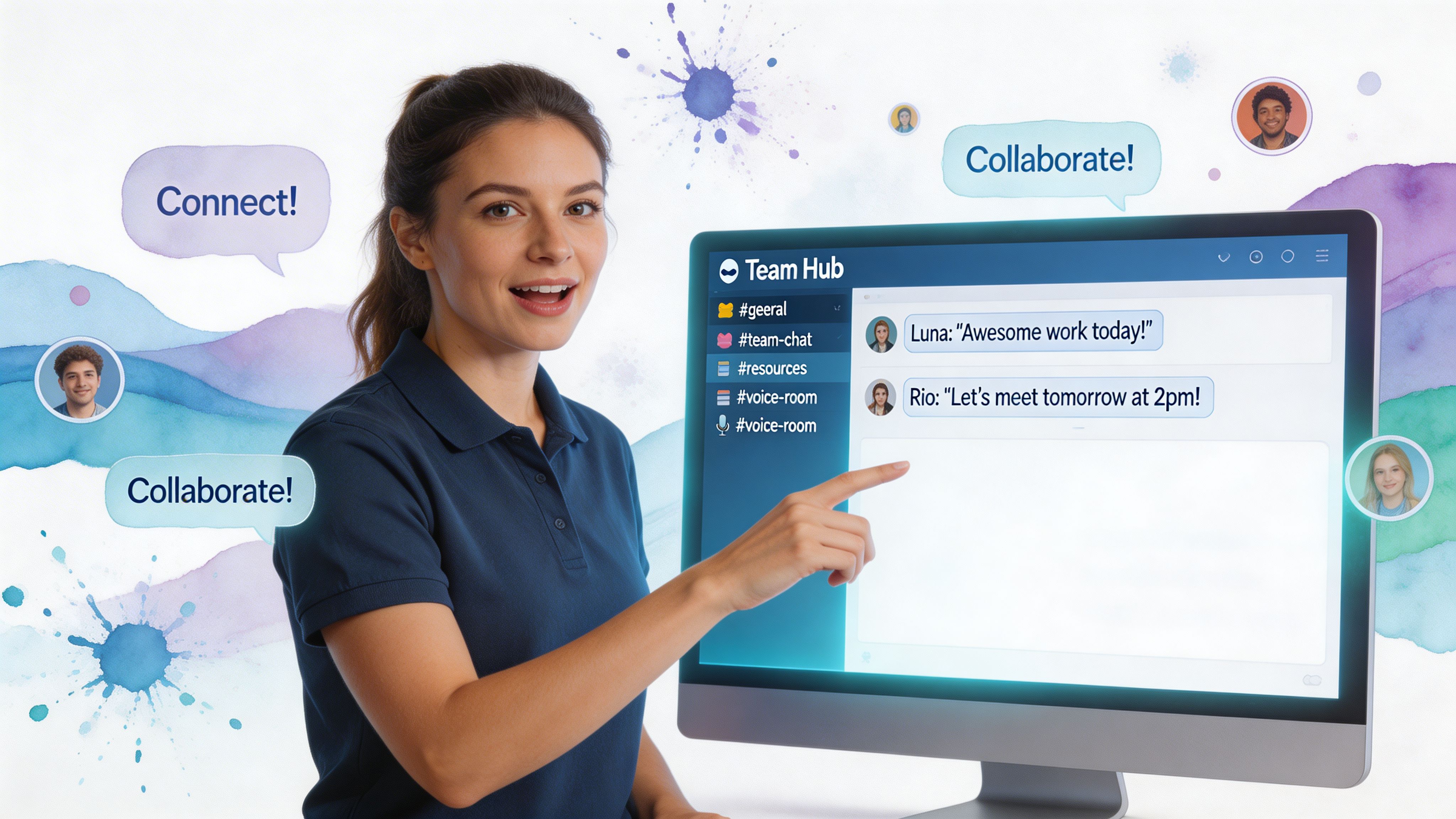
Discord works unusually well for coaching because it combines communication, structure, and community in one place.
Text channels stay available all day, so clients can check in when they finish a workout, ask a quick form question, or post a meal photo without scheduling a call. Voice channels make live interaction easy, which matters for accountability, group coaching, and Q&A. The result feels more alive than email and more organized than a simple group chat.
The platform matches how coaching actually happens
Most coaching isn't a single weekly call.
It's reminders, questions, corrections, wins, plateaus, mindset dips, and small moments of support. Discord fits that rhythm well because it lets you separate conversations by purpose.
A coach can run channels like:
- Daily check-ins for habits and accountability
- Wins and progress to build momentum
- Technique review for form videos or movement feedback
- Resources for workouts, PDFs, meal guides, or replays
- Live room access for calls, office hours, and member sessions
That structure creates peer support too. Clients don't only learn from the coach. They learn from each other. In practice, that often improves consistency because members see other people showing up.
Voice makes Discord coaching stronger
The voice side is a major advantage.
Discord reported that players using voice channels played games 66% more days over the three months ended December 31, 2025, which points to how live interaction can increase retention and participation in community-based environments (Discord press release). For coaches, the lesson is simple. Real-time conversation helps people stay connected.
That applies directly to:
- weekly coaching calls
- live mobility sessions
- post-match reviews
- member Q&A rooms
- drop-in accountability sessions
The catch is commerce
Discord was built for community, not for selling coaching.
It gives you channels, permissions, roles, and strong social features. What it doesn't give you natively is a clean business flow for subscriptions, billing, cancellations, and paid access management.
Discord is excellent at helping people gather. It is not excellent at deciding who should pay, what they should unlock, and what happens when a subscription ends.
That's why many coaches end up with a strong server and a weak monetization system. The engagement is already there. The business infrastructure usually isn't.
Seven Proven Ways to Monetize Your Discord Coaching
There isn't one right way to sell inside Discord. The best model depends on what kind of support you provide and how much access you want members to have.
A smart move is to start with one clear paid offer, then add layers once members understand the value.
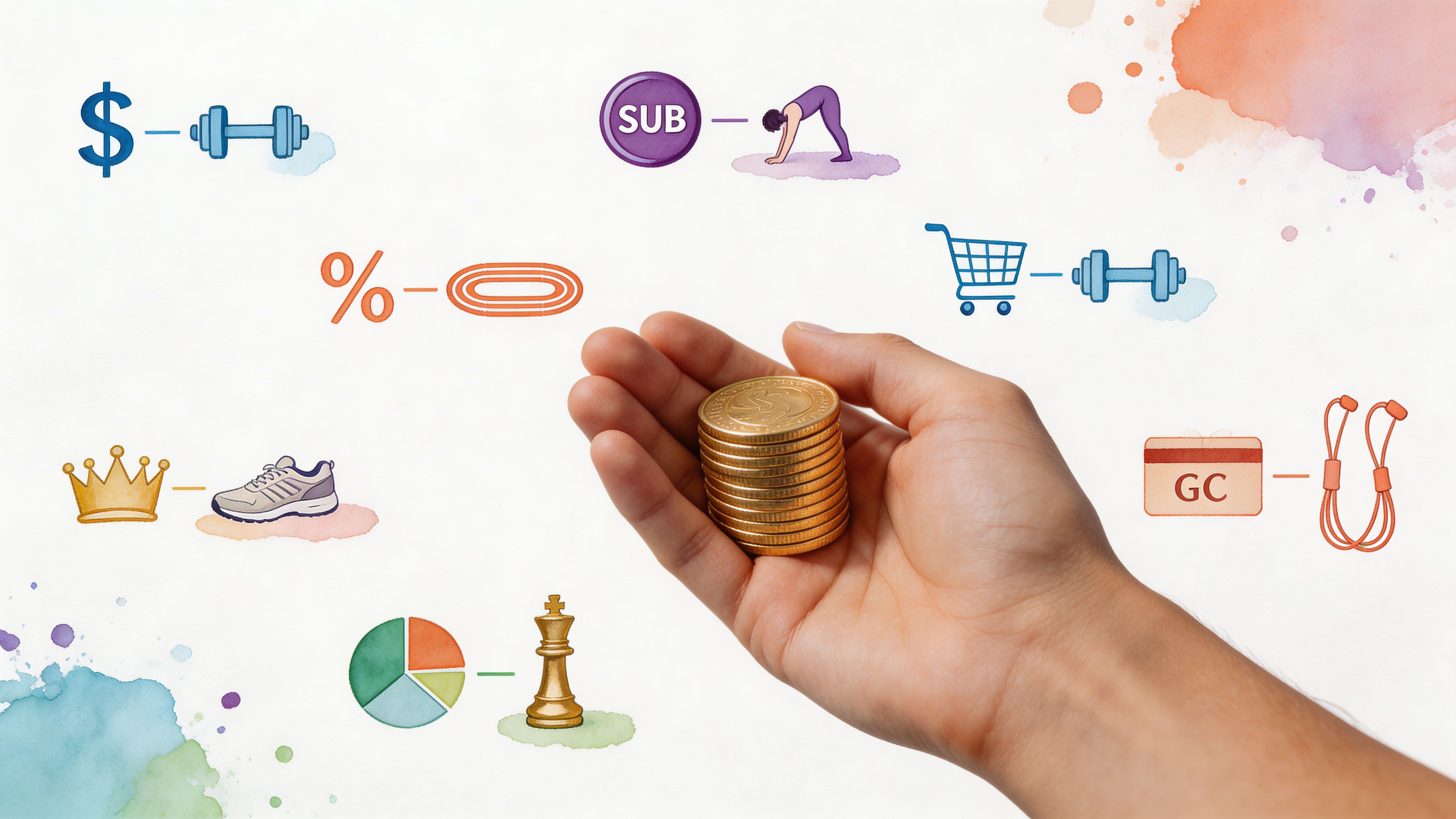
1. Charge for access to a private server
This is the simplest entry point.
Instead of leaving the whole community open, make the server itself the product. Members pay to join a focused coaching space with accountability, resources, and direct interaction.
This works well for:
- weight loss coaching groups
- online running clubs
- beginner strength communities
- yoga accountability memberships
The value isn't just "chat access." It's the environment, routine, and support.
2. Build tiered memberships
Not every member wants the same level of help.
A tiered setup lets you serve casual members and high-touch clients in the same ecosystem. If you want a broader view of how creators structure these offers, this breakdown of community monetization models is a useful starting point.
A simple version might look like this:
| Tier | Best for | What they get |
|---|---|---|
| Community | Members who want structure and accountability | Group channels, announcements, basic resources |
| Premium | Members who want coaching input | Group calls, premium channels, feedback access |
| VIP | Members who want direct support | 1:1 messaging, private review channels, closer access |
3. Lock premium channels for paying members
This is one of the easiest monetization upgrades because you don't need to rebuild your server.
Keep some channels free. Lock others behind a paid role.
Examples:
- Program vault with training plans and replays
- Nutrition library with meal resources
- Coach feedback channel for form checks
- Advanced strategy room for experienced athletes
The free area becomes your preview. The paid area becomes the product.
4. Run group coaching inside Discord
Group coaching often delivers the best balance of impact and scalability.
You can host weekly calls in voice, assign themes by channel, and keep everyone accountable between sessions. A football skills coach might run a monthly striker group. A yoga teacher might host a mobility circle. A nutrition coach might run a habit reset cohort.
A live walkthrough helps if you're still thinking through setup and offer design:
5. Sell programs and resources
Not everyone wants a subscription right away.
Some people prefer a one-time purchase. Discord can support that if you create channels or content libraries for specific products.
Think about:
- a 4-week fat loss plan
- an off-season speed program
- a mobility bundle
- a meal prep resource pack
- guided audio sessions for recovery or mindset
These offers can live alongside membership tiers instead of replacing them.
6. Offer direct access to the coach
Some clients pay for proximity.
They want faster answers, private feedback, or a dedicated channel where they can post videos and questions. That kind of access should cost more because it takes more of your time.
Practical rule: If an offer increases your response load, it should be a higher-priced tier, not a bonus included for everyone.
Discord makes this model easy operationally because private spaces can sit inside the same server as your community.
7. Host live sessions and member-only Q&A
Live access creates urgency and helps members feel they're part of something active.
You can monetize:
- monthly office hours
- live technique clinics
- team review sessions
- ask-me-anything calls
- challenge kickoffs and check-ins
This model works especially well when paired with a membership, because recurring live events give members a reason to stay subscribed.
The Hidden Costs of Manual Discord Management
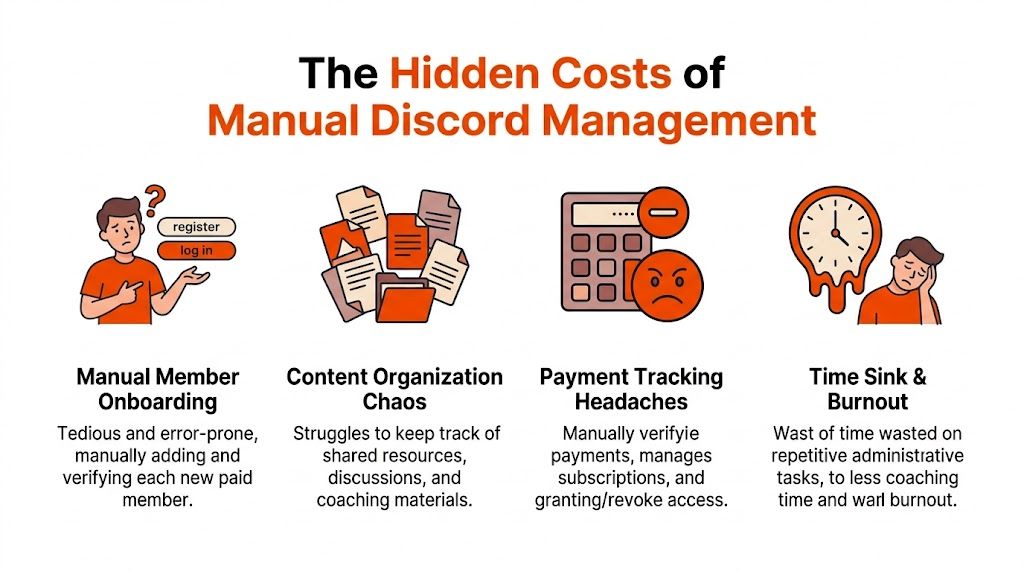
The hard part of discord coaching usually isn't content. It's operations.
A coach can absolutely collect payments manually, add members by hand, and update roles one by one. A lot of people start there. The issue is what that process turns into once the server grows.
What manual management looks like in real life
One member pays through Stripe. Another sends money through PayPal. Someone else messages saying they paid but used a different email. A cancellation comes in on a weekend. A failed payment goes unnoticed. A former member still has access to premium channels because no one removed their role.
That's not a coaching system. That's admin drift.
The coach ends up doing tasks like:
- Checking payment receipts against Discord usernames
- Assigning roles manually every time someone joins
- Removing access late after cancellations or failed charges
- Answering support messages about invites, permissions, and missing channels
- Tracking memberships in spreadsheets because Discord isn't the billing system
The real cost isn't only time
Manual systems create friction for the member and stress for the coach.
When onboarding is clunky, people lose momentum right after paying. When access is wrong, paying members feel ignored. When old members stay inside premium areas, the offer starts to feel leaky and less valuable.
A related problem is that scalable monetization guidance is still thin. One report referenced in a Clash School article notes a 40% rise in coaching servers, yet only 15% mention monetization tools, which helps explain why coaches keep running into payment disputes and churn when they try to manage things manually (Clash School on one-on-one coaching with Discord).
Manual work breaks at the exact moment your offer starts working
The irony is that success makes the mess worse.
A free server with a handful of paid members can be managed by memory. A growing paid community can't. Once you have multiple tiers, one-time products, live sessions, and different levels of access, manual handling starts stealing time from coaching.
The more valuable your community becomes, the less sense it makes to run it like a side project.
If you want recurring income, the member experience has to be dependable. Manual processes rarely stay dependable for long.
The Automation Shift From Busy Coach to CEO
Automation sounds technical, but the business idea is simple.
A member pays. The system confirms the payment. The right Discord role gets assigned. If the subscription ends or fails, access changes automatically. That's the core shift.
Once you have that in place, your server stops depending on your memory and your inbox.
Automation changes the job you do every day
Without automation, the coach acts like a receptionist, bookkeeper, moderator, and support desk. Coaching becomes the thing squeezed in between admin tasks.
With automation, the coach gets to focus on work that moves the business forward:
- improving the offer
- delivering coaching
- retaining members
- creating better resources
- building community culture
That's why this isn't just a convenience upgrade. It's a role change. You move from running around the system to designing the system.
Growth is easier when the machine is clean
Discord's scale matters here.
The platform reached 259 million monthly active users in 2025, up 32% from 196 million in 2023, which shows how large the opportunity is for coaches building structured communities on top of it (Discord growth statistics). But a larger platform opportunity only helps you if your backend can handle members reliably.
If you want a simple way to think about this operationally, these ideas on how to automate repetitive tasks apply well to coaching businesses too. Repeated admin work should become a process, not a daily decision.
Coaches burn out when they keep doing work a system should handle.
A clean automated flow gives members a professional experience. It also protects your energy. That matters more than most coaches realize, especially once renewals, failed payments, and multiple tiers enter the picture.
Your Blueprint for a Profitable Discord Coaching Server
A profitable server doesn't need to be complicated. It needs to be clear.
Most strong Discord coaching businesses are built on three things: a clean server structure, offers people can understand quickly, and an onboarding flow that works without manual intervention.
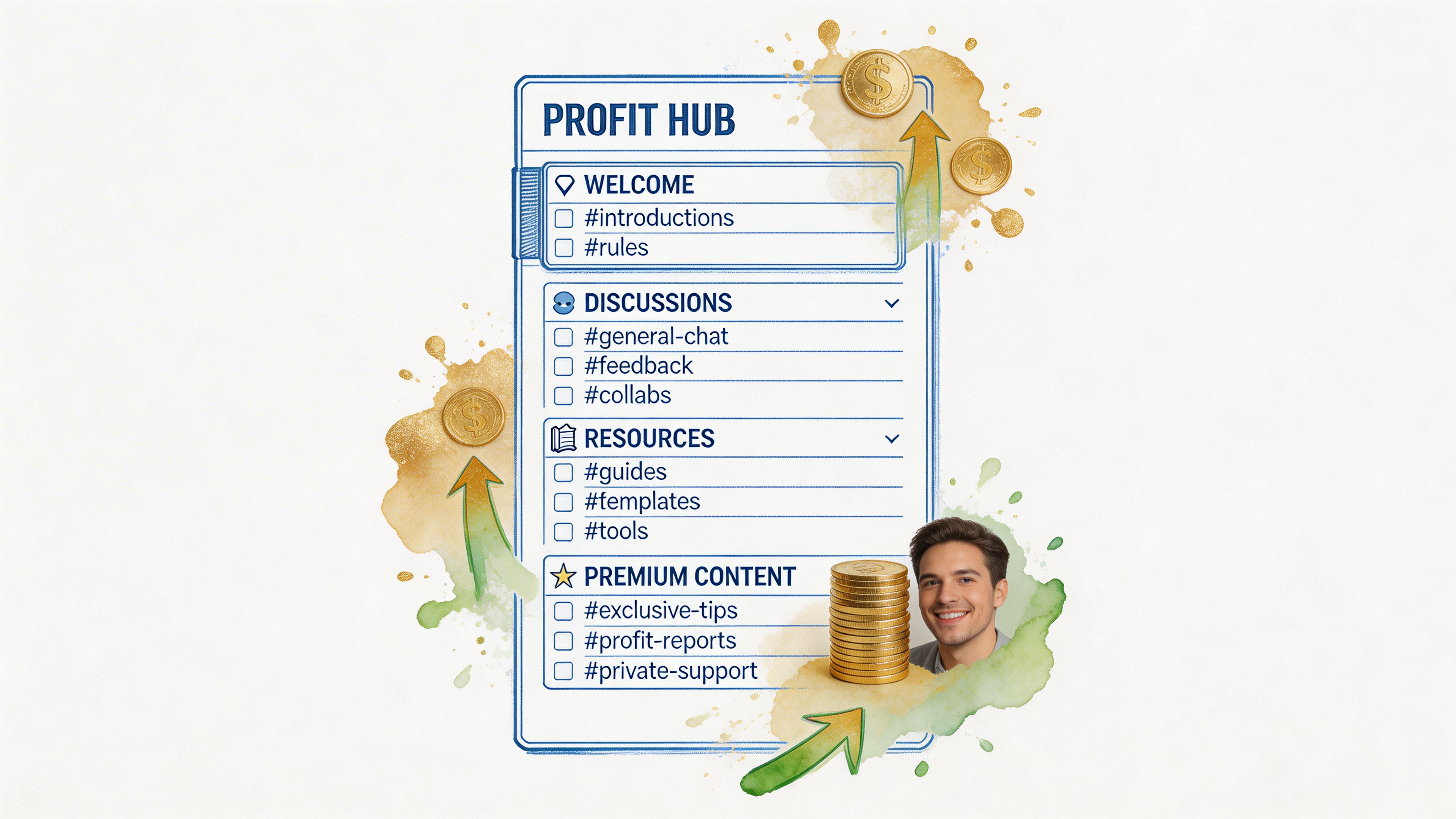
Start with server architecture
Don't create channels just because Discord allows it.
Create them because each one supports a behavior you want from members. Too many coaches build a maze. Members join, see twenty channels, and don't know where to start.
A cleaner structure looks like this:
| Category | Purpose | Access |
|---|---|---|
| Start here | Welcome, rules, how to use the server | Everyone |
| Community | General chat, wins, check-ins | Free or all paid members |
| Resources | Guides, recordings, templates, files | Paid depending on tier |
| Coaching rooms | Premium discussion, reviews, support | Premium or VIP |
| Live sessions | Voice channels for calls and Q&A | Based on tier |
| Private support | One-to-one channels | VIP only |
Discord supports this well because its permission system allows exclusive one-to-one channels and tier-based access, which can scale without manual administration, even for coaches handling 50+ concurrent clients (TCEA on Discord coaching structure).
Build offers around outcomes, not features
People don't pay for "three channels and one voice room."
They pay for progress, accountability, access, and clarity. So name your tiers around the result or support level, not around technical Discord language.
Examples:
- Accountability Membership for habit tracking and community support
- Coaching Club for weekly calls and deeper feedback
- VIP Access for direct support and private review
A weak offer says, "You get access to a premium category."
A stronger offer says, "You get weekly live coaching, video feedback, and direct support when you're stuck."
Keep your tiers easy to compare
Three levels are usually enough for most coaches.
Use contrast instead of complexity:
- Entry tier for community and consistency
- Mid tier for coaching and live interaction
- Top tier for personal access
If you need inspiration for how to map channels and offers together, this Discord server template guide gives a useful structural example.
Design the member journey before you start selling
A paid Discord should feel smooth from the moment someone decides to join.
The ideal flow is simple:
- They land on a page that explains the offer clearly.
- They choose a membership or product without messaging you first.
- They pay through a connected checkout.
- They receive access automatically to the right Discord server or role.
- They enter a clear welcome path telling them exactly where to post, what to read, and what to do first.
That flow removes uncertainty. It also cuts support messages because members don't need to ask where everything is.
Choose content rhythms you can sustain
A lot of coaches overpromise.
They offer daily live calls, nonstop feedback, and constant access, then realize they've built a job they don't want. A stronger model is one you can deliver consistently for months.
Try a rhythm like:
- Weekly live call for coaching and Q&A
- Daily async check-in channel for accountability
- Monthly challenge or focus theme to keep momentum high
- Resource library that grows over time instead of being rebuilt constantly
A paid community is easier to retain when members know what happens every week.
Use one system for selling and access control
Many Discord communities transform into real businesses.
You need one place to present the offer, collect payment, and connect the payment status to Discord access. Tools like Patreon, Stripe-based membership setups, and community monetization platforms can all play a role depending on your stack. Join My Coach is one option built specifically for coaches who want to create a landing page, sell subscriptions or one-time products, and automatically grant or revoke Discord access through Stripe-connected workflows.
The less you improvise, the more professional the business feels to members.
From Community to Recurring Income The Final Step
If your Discord is already active, you don't need to start from zero.
You need to turn loose engagement into a structured offer. That means deciding what people are paying for, separating free and paid access, and removing yourself from repetitive admin work that should never depend on manual effort.
That's the key upgrade in discord coaching.
Not more channels. Not more messages. Not more hustle. A system.
When the server has clear tiers, paid access, organized delivery, and automated membership handling, it stops feeling like a group chat you manage in spare moments. It starts working like a business asset that can produce recurring revenue month after month.
Your expertise already has value. Your community has likely already proved that. The final step is giving that value a clean container people can buy into and stay inside.
If you're ready to turn your Discord into a paid coaching business, Join My Coach gives you a simple way to create an offer page, connect payments, and automate member access without building the system by hand.