
How to Create and Sell Your First Digital Sport Program in 2026
Published on March 26, 2026 · Reading time: 16 min
You're a coach with valuable knowledge, but your time is finite. You can only coach so many people one-on-one. So, how do you scale your impact and your income? The answer is simpler than you think: create a digital sport program.
This isn't about building a massive, complicated online course. It's about packaging your expertise into a focused, downloadable resource—like a PDF guide, a short video series, or a structured plan—that solves a specific problem for your clients. Think less "get fit" and more "a 4-week guide to your first pull-up" or "a 7-day meal plan for reducing inflammation."
That’s what sells.
Find the Profitable Problem Your Program Can Solve

The best ideas for a downloadable program aren't found in a flash of genius. They're discovered in the everyday conversations you're already having with your community.
Your audience is constantly telling you what they need. You just have to know where to listen.
Listen to Your Community's Pain Points
The best way to figure out what to create is to pay close attention to the questions people are already asking you. These aren't just questions; they are golden opportunities.
- Direct Messages (DMs): What are the recurring themes in your inbox? If you get asked "How can I start strength training at home with just dumbbells?" more than once—that’s a program idea.
- Comment Sections: Scan the comments on your posts and even your competitors' content. Phrases like "I wish I had a simple guide for..." or "I always struggle with..." are direct requests for help.
- Group Chats and Forums: If you run a free WhatsApp group or hang out in online forums, tune into the frustrations people are sharing. A yoga teacher might notice beginners constantly asking for a routine to relieve desk-related back pain. That’s a sellable PDF guide.
The goal is to move from a vague concept like 'wellness' to a concrete solution like 'a 4-week program to build a consistent morning mobility routine.' Specificity sells because it promises a clear, measurable outcome.
Validate Your Idea Before You Build
Once you have an idea for a guide or program, don't just disappear for weeks to create it. You need to validate it first. This is about confirming that people are not just interested but are actually willing to pay for the solution.
You can do this with a simple "interest check" post on your social media. Frame it as a question: "I'm thinking of creating a downloadable 30-day guide to help runners build core strength and prevent injuries. Would a simple, structured plan like that be helpful?"
The feedback you get is everything.
The market for coaching is exploding, so there’s plenty of room for specialized programs that deliver real results. The global coaching industry is on track to hit $5.34 billion in value by 2026, with the number of coaches jumping by 15% since 2023. This huge growth highlights a massive demand for expert guidance.
By listening first and validating second, you make sure your efforts are focused on creating a sport program people are genuinely excited to buy. This crucial first step is what turns your coaching expertise into a valuable digital asset and a source of recurring income.
Structuring Your Program for Maximum Client Success
A brilliant program idea is just the start. The real magic happens when you turn that idea into a clear, step-by-step journey that takes your clients from where they are to where they want to be, even without your direct supervision.
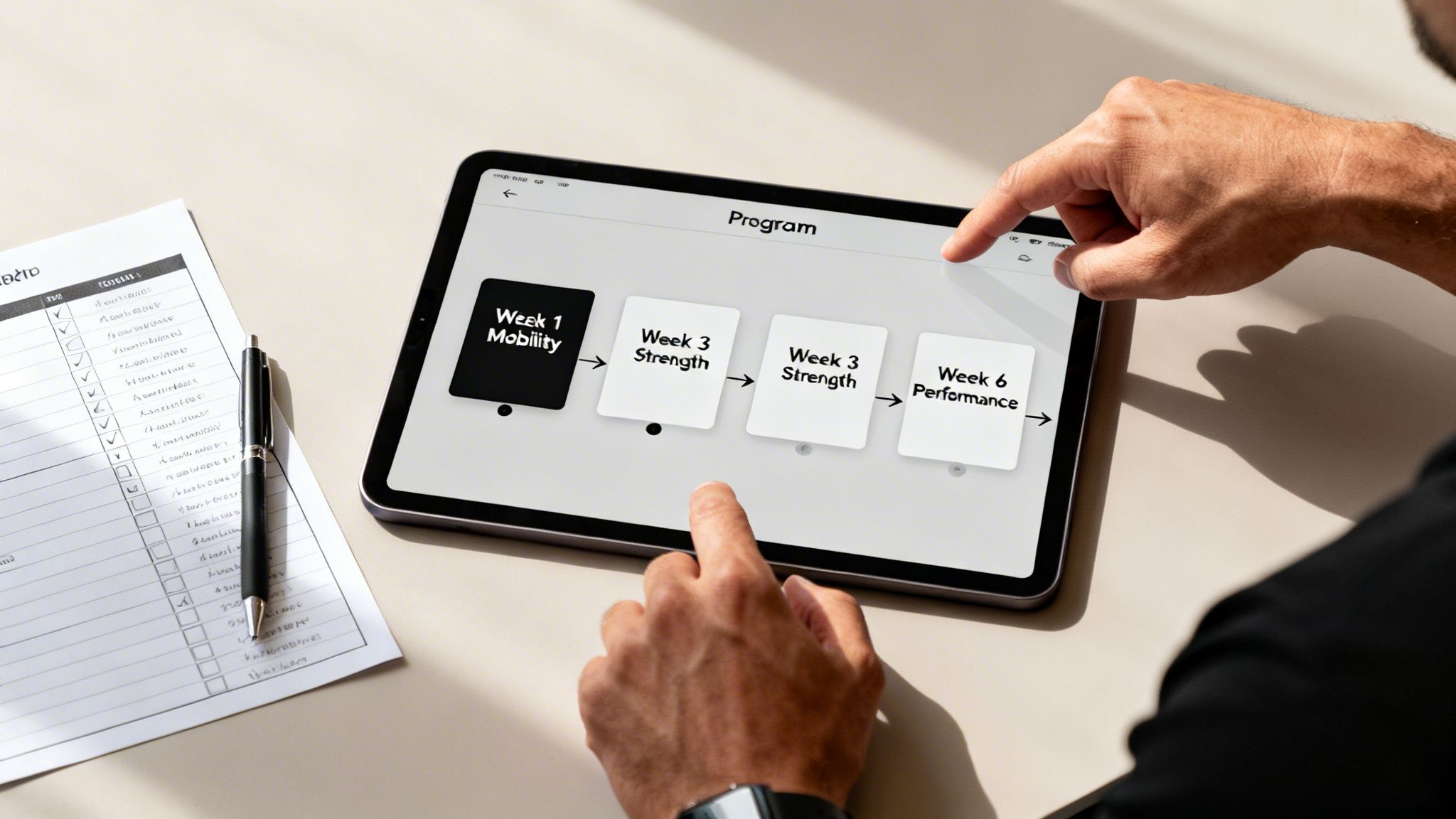
The structure is what turns your expertise into a repeatable process for them. A random list of exercises or a confusing meal plan just leads to overwhelm, and overwhelm is the enemy of progress, especially in a self-guided product.
Whether you're creating a PDF, short videos, or a simple workbook, the goal is always the same: logical progression. Your client needs to feel a sense of momentum, knowing exactly what to do next.
Building Your Program's Core Structure
I've found it helpful to think of any program in three distinct phases. This isn't a rigid rule, but a mental model that ensures your clients start strong, stay engaged, and finish with a real sense of accomplishment.
- The On-Ramp (Week 1): The first week is all about setting the stage. Don't throw your clients into the deep end with your hardest workouts. Instead, use this time for foundational work. Think mobility assessments, basic technique tutorials, and setting clear goals. Your aim here is to build confidence and establish good habits from day one.
- The Main Work (Weeks 2-3): This is where you deliver the core transformation. Now you can introduce progressive overload by gradually increasing workout difficulty. This is also where you’ll deliver the bulk of your nutrition advice or skill drills. Keep your instructions crystal clear and concise, especially in a written guide.
- The Cool-Down & Next Steps (Week 4): The final phase is about cementing their gains and looking ahead. This could be a deload week, a section on celebrating their progress, or teaching clients how to maintain their results on their own. It’s also the perfect time to talk about what comes next, whether that’s a more advanced program or an invitation to join your paid coaching community.
This phased approach helps manage client expectations and creates a predictable rhythm—which is vital when you sell a sport program to busy people.
Choosing the Right Format for Your Digital Sport Program
This table breaks down some of the most common formats for downloadable products to help you decide which one best fits your content and your coaching style.
| Program Format | Best For | Pros | Cons |
|---|---|---|---|
| PDF Guides/Workbooks | Simple, one-off programs with clear instructions and evergreen content. | Easy to create and distribute; high perceived value; clients can keep it forever. | Not interactive; harder to update; can be easily shared without permission. |
| Short Video Series | Demonstrating complex movements, exercises, or techniques with perfect form. | Highly engaging; builds a stronger connection; can be hosted on private platforms. | More time-consuming to produce; requires basic video editing skills and equipment. |
| Template Bundles | Providing customizable meal plans, workout schedules, or progress trackers. | Highly practical; saves clients time; easily adaptable to individual needs. | Can feel less personal; value is in the utility, not just information. |
| Hybrid (PDF + Video) | Combining detailed written guides with video demonstrations for key exercises. | Provides deep content and high engagement; great for premium-priced digital products. | Can be more work to set up and manage; requires organizing multiple file types. |
Ultimately, there's no single "best" format. The key is to pick the one that allows you to deliver your unique expertise most effectively while creating the best possible experience for your clients.
Creating High-Value Supporting Materials
Supporting materials are what elevate a good program to a great one. They show you've thought through the entire client experience and provide tangible tools that help them succeed.
These "extras" also dramatically increase the perceived value of your offer, making the price an easier decision for potential buyers.
A well-designed nutrition guide or a simple progress tracker can be the difference between a client who "sort of" follows the program and one who gets amazing results and becomes a walking testimonial for your brand.
Here are a few ideas for high-impact resources that don't take a ton of time to create:
- Printable Workout Logs: Simple PDFs that clients can print to track their sets, reps, and weights.
- Quick-Reference Nutrition Guide: A one-page document with go-to meal ideas, a healthy grocery list, or a macro cheat sheet.
- Goal-Setting Worksheet: A one-page PDF to help clients clarify their "why" and set realistic milestones for the program.
- Video Library of Core Exercises: A collection of short, unlisted videos demonstrating perfect form for every movement in your program, linked within your PDF.
These assets don't need to be fancy, but they must be practical. When you build a well-structured program supported by genuinely helpful resources, you're not just selling information—you're delivering a complete solution that gets real-world results.
Pricing Your Program for Profit and Value
Let's talk about the part where most coaches get stuck: pricing. It’s tough. You're passionate about helping people, and it’s so easy to undervalue your own expertise. But getting this right is what makes your coaching business sustainable, allowing you to keep creating more valuable resources for your clients.
It's time for a mindset shift. The biggest mistake is pricing based on the hours you spent making a PDF or recording a video. That's not what your clients are buying.
They aren't buying a workout plan; they're buying the confidence to finally walk into a gym. They aren't buying a video series; they're buying the freedom to run without pain. You’re selling a transformation, so price the result, not the resources.
Choosing Your Pricing Model
For a downloadable sport program, your pricing model is usually straightforward. However, you can still be creative.
- One-Time Fee: This is the clean and simple option, perfect for self-guided resources like a PDF guide or a pre-recorded video course. The client pays once and gets lifetime access. It’s predictable and requires very little ongoing management on your end.
- Pay What You Want: An interesting model for an entry-level guide. You set a minimum price (e.g., $5) and let your audience pay more if they find it valuable. This can lower the barrier to entry and build goodwill.
- Tiered Pricing: This is my personal favorite because it lets clients choose their own adventure. You offer different levels of access at different prices. For example, a "Basic" tier might be the PDF guide, while a "Premium" tier adds a bonus video library or a one-time Q&A session. It meets clients where they are, both in budget and support needs.
Your price is a signal. If you price your program too low, you risk making potential clients question its quality. Don't be afraid to charge what your expertise and the results you deliver are actually worth.
Set a Price You Feel Good About
The sports coaching market is absolutely booming, projected to hit $8.79 billion in 2025. And it’s not slowing down, with growth expected to reach $15.84 billion by 2034. This tells us one thing: people are more willing than ever to pay for expert guidance. You can read the full research about the sports coaching market to see the massive opportunity here.
A good starting point is to see what other coaches in your niche are charging for similar digital products. This isn't about copying them; it's about understanding the market rate so you can position yourself effectively.
Next, honestly assess the depth of your program. A comprehensive guide that solves a huge, painful problem for your clients should absolutely command a higher price than a simple introductory checklist.
If you're launching a new program, one of the best strategies is to kick things off with an introductory offer. This rewards your early adopters and helps you gather those all-important testimonials. You could offer a 20-30% discount for the first week or for the first 20 people who sign up. This creates urgency and builds momentum right out of the gate.
Ultimately, you need to land on a price that feels fair to your clients but also profitable for you. When you truly believe in the transformation you provide, you'll be able to talk about your price with confidence—framing it not as a cost, but as an investment in a life-changing result.
Marketing Your Program Without Feeling Like a Salesperson
You’ve built an incredible program. Now you just have to get it out there. For a lot of coaches, this is the part they dread—it brings to mind pushy tactics and aggressive sales pitches.
But authentic marketing isn't about any of that. It’s simply about storytelling and using the trust you’ve already earned. Forget the hard sell. Your single best marketing tool is the genuine connection you have with your audience. You’re just guiding people who already know and like you toward a solution you built specifically for them.
Start With Your Warm Audience
Your most likely buyers are the people who are already in your world. They follow you on social media, open your emails, and comment on your content. This is your "warm" audience, and it's where all your initial energy should go.
You don't need a massive following to sell out a digital program. A small, engaged community is infinitely more powerful than a huge, passive one. These are the people who will become your founding members and your biggest champions down the line.
Your job isn't to convince strangers. It's to show your existing community that you've created the exact solution they've been asking for. This shift in mindset makes marketing feel less like selling and more like serving.
A great way to begin is by simply teasing what you're working on. Share some behind-the-scenes glimpses as you design the PDF or record a video. Talk about your "why"—the specific problem you're fired up about solving for them. This builds real anticipation and makes your audience feel like they’re part of the journey with you.
Build a Simple Launch Plan
A launch for a digital product doesn't need to be some complicated, multi-channel affair. The goal is just to build excitement and clearly show people the value. A simple, effective plan could look something like this:
- Pre-Launch (1–2 weeks out): Start talking about the problem your program solves way more often. Share valuable free tips, run polls on Instagram, and go live to answer questions on the topic. This primes your audience for the solution you're about to drop.
- Showcase Social Proof: If you sent the guide to a few clients for feedback, now is the time to plaster those testimonials everywhere. Nothing sells better than a real person sharing their success. Post screenshots of their wins or powerful written reviews.
- The "Open Cart" Period (3–5 days): This is it—announce that your program is officially for sale. During these few days, all your content should focus on the transformation it offers, answering FAQs, and tackling common objections head-on. Create a little urgency by mentioning that a special introductory price is about to expire.
The sports coaching industry is absolutely booming, especially in North America. The US market alone is projected to rocket to $15.5 billion by 2026, while the youth sports sector is already worth over $40 billion annually. This explosive growth proves there's a clear, sustained hunger for specialized coaching. You can learn more about the sports coaching industry's size and see just how your unique program fits into this expanding market.
By focusing on authentic storytelling and giving away real value, you can create a marketing plan that feels right to you and connects deeply with your people. For more strategies on this, be sure to check out our in-depth coaching community monetization guide.
Choosing the Right Tech to Sell and Deliver with Ease
Let's be honest—your tech should make your life easier, not give you a headache. After pouring all that energy into creating a fantastic program, the last thing you want is a clunky, confusing system to sell and deliver it.
The good news is you don’t need a complicated website or a degree in computer science to make this work. The goal is simple: automation. A new client pays, and they instantly get an email with the download link. That’s it. This frees you up to do what you actually love to do: coach.
From Simple Links to Automated Systems
In the beginning, you might start by using a simple payment link from a service like Stripe or PayPal. You create a link for your program's price, share it with clients, and then manually email them the PDF once you see the payment come through.
This works, but it doesn’t scale. Imagine trying to juggle DMs and check bank transfers for 50 new clients during a launch. It quickly turns into a full-time admin job you never signed up for.
The real game-changer is a system that connects payment directly to delivery. When a client pays, an action is triggered automatically, like sending them the PDF or a link to a private video library. This completely removes the manual "send the file" step, saving you countless hours.
This kind of automation is key for selling digital products like guides, workbooks, and templates. It makes the entire process professional and seamless for both you and your customer.
This process flow shows how your authentic marketing efforts lead to a successful launch, which is then fulfilled seamlessly by your technology.
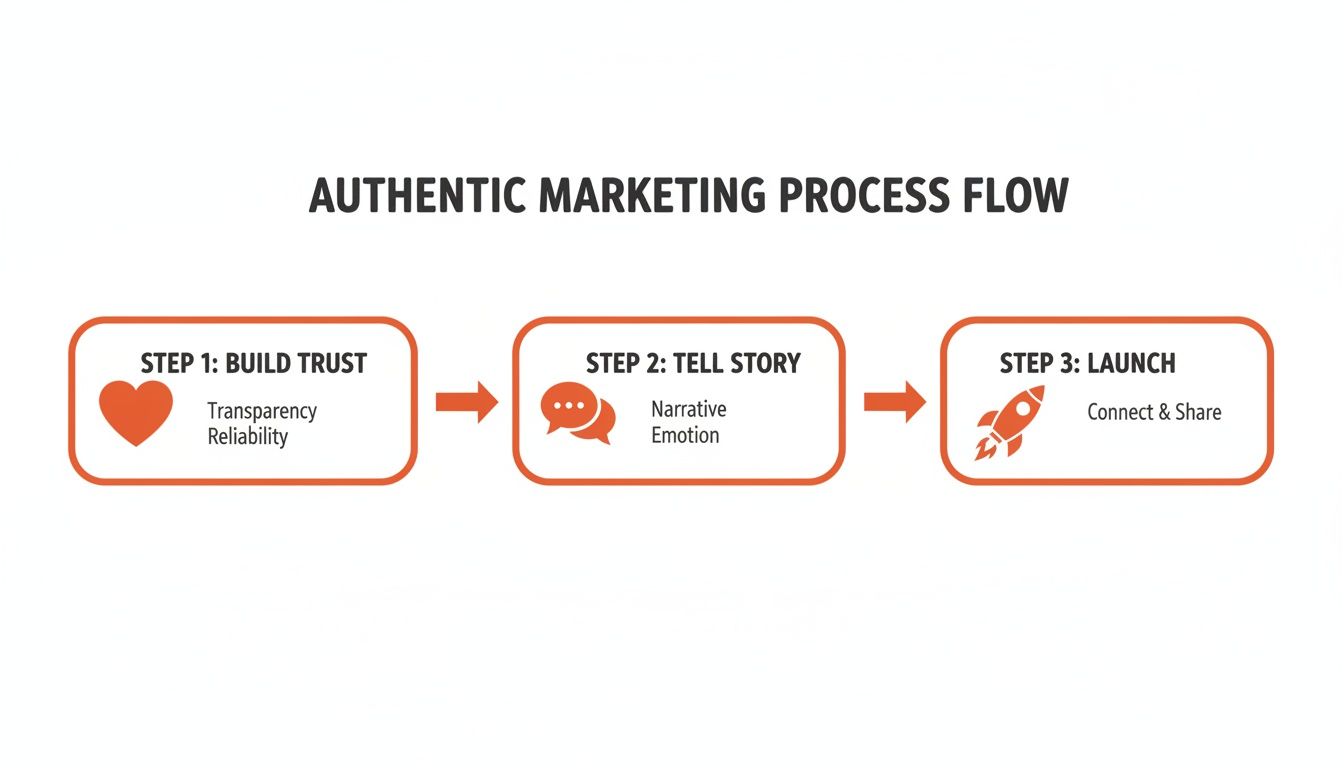
The key insight here is that your sales process doesn't just end at the purchase; it flows directly into a smooth delivery experience powered by the right tools.
What to Look for in a Tech Solution
When you're looking at different options, focus on simplicity and how well it fits your workflow as a creator. You're a coach, not a tech administrator.
Here are the non-negotiable features for selling digital products:
- Easy Page Builder: Can you spin up a clean, simple sales page in minutes without touching any code? You should be able to add your program details, price, and a "buy now" button with zero fuss.
- Payment Integration: Does it connect directly with a trusted payment processor like Stripe? This is crucial for making sure your payments are secure and you get paid out reliably.
- Automatic Digital Delivery: This is the big one. The tool must be able to automatically send the digital file (or a link to it) to the customer immediately after a successful payment.
- Flexibility for Different Offers: Can you sell a one-time program, a template bundle, and a recurring monthly community subscription from the same platform? Look for tools that let you create different tiers or offers without building a whole new setup each time.
For an even deeper dive into this, you can find some great insights in our article on how to sell online courses successfully, which covers many of these same concepts.
Platforms designed specifically for creators, like Join My Coach, are built to handle all of this for you. They’re created with the understanding that you want to set things up once and then focus entirely on your clients, not on managing user lists and payment statuses. This is the kind of automation that turns your sport program from a side hustle into a smooth, professional business.
A Few Common Questions About Selling Your Sport Program
When you're looking to turn your coaching expertise into a digital program, a few questions always seem to pop up. It's totally normal. Getting the practical details sorted out from the start can save you a world of headaches down the road.
Let's tackle some of the most common things coaches ask.
How Much Content Do I Actually Need to Start?
Honestly, start way smaller than you think. A focused 4-week program in a simple PDF that gets one specific, tangible result is far more powerful than some monster 12-week course that tries to cover everything.
Your first goal is simple: deliver a quick, measurable win for your client. This builds their confidence in you and gives you a powerful testimonial you can use forever. A well-structured 20-page PDF or a series of 10-15 short videos can be incredibly valuable if it solves a real, nagging problem.
You can always build a "Part 2" or an advanced version later on. Get a win on the board first.
How Can I Take Payments Without a Complicated Website?
You absolutely do not need a full-blown, complicated website to start selling. Modern tools are built specifically to get you past this headache.
Platforms designed for coaches let you spin up a simple, clean payment page in minutes. This page connects directly to your Stripe account for secure processing. When someone pays, the right tool can automatically send them the digital download and, if you have one, drop them into your private WhatsApp or Discord group, making the whole thing hands-free for you.
The key is automation. The best systems handle the entire flow from payment to access, freeing you from manual admin work so you can focus 100% on creating your next great resource.
How Do I Stop People from Illegally Sharing My Program?
While it’s impossible to stop piracy 100% of the time, you can make sharing your program both difficult and completely unappealing. Selling your PDF or video course as an entry point to a private, paid community is the single best way to do this.
When access to the community is tied to a subscription, automated platforms can immediately remove anyone whose payment fails, protecting your revenue.
But more importantly, the real value you provide through community interaction and your direct involvement makes the paid experience way more desirable than some stolen, lifeless file. People pay for access to you and the community around you.
Can I Really Sell a Program if I Have a Small Following?
Absolutely. In fact, a small, highly engaged community is often way more powerful than a huge, passive one. Your first 10-20 customers will almost always be your most loyal followers—the people who already know, like, and trust you.
Focus on giving this first group an incredible experience with your digital product. Their success stories, progress photos, and testimonials will become your single most powerful marketing asset.
This is the social proof that will attract your next hundred customers. Start with the audience you have right now and just deliver massive value—the rest will follow.
Ready to turn your expertise into a thriving business? Join My Coach makes it simple to sell your sport program, digital guides, and community memberships on WhatsApp or Discord by automating payments and member access. Set up your page in minutes and start building your paid community today. Get started with Join My Coach for free.